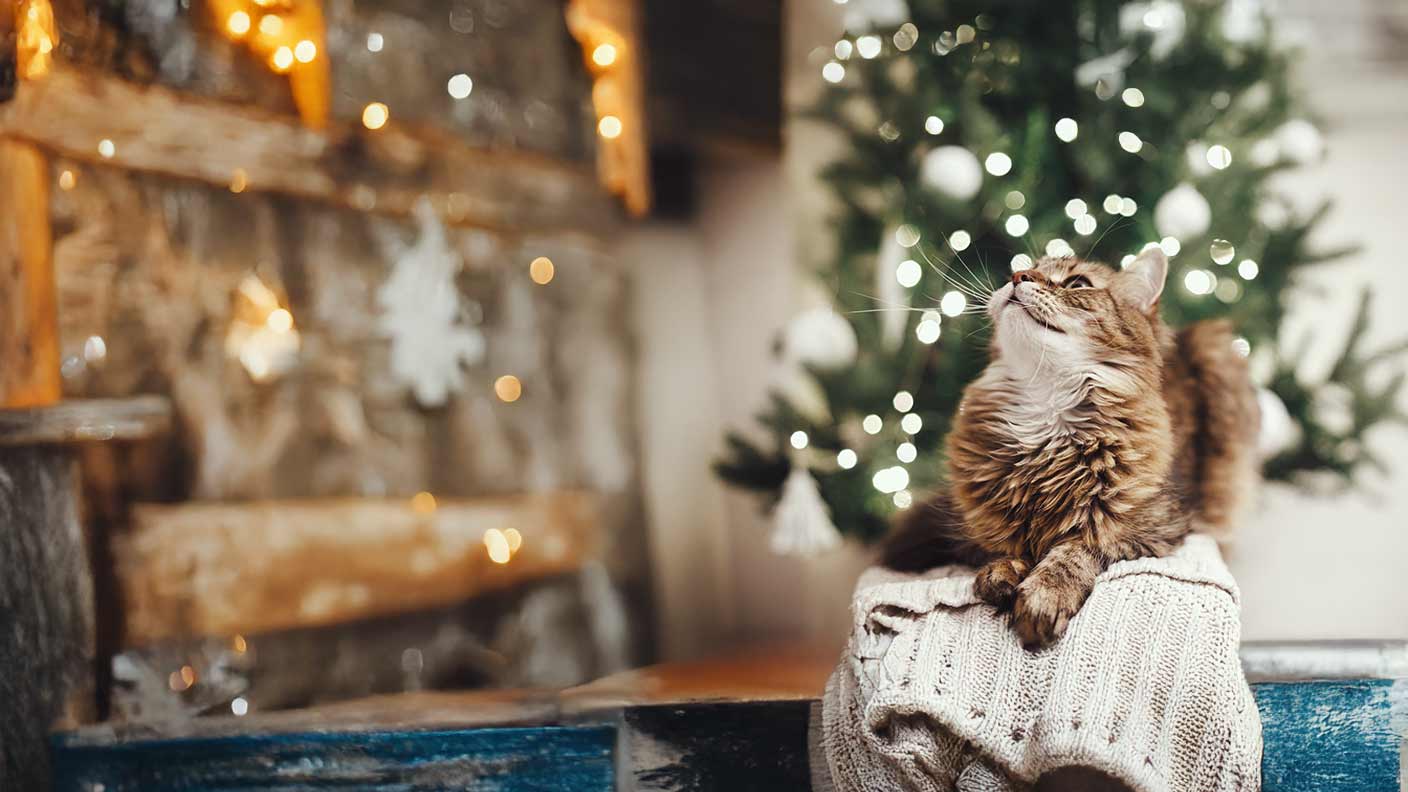
Cats at Christmas
Many pet parents are preparing for Cat-mas however, your furry little helper may be bringing equal amounts of mischief and cheer. Cat-proof your home, discover what cats can eat at Christmas, and stop your kitty from climbing your Christmas tree.
Pet insurance provided by Pinnacle Insurance Ltd.
Keeping cats safe at Christmas
If you’re more ‘deck the halls’ than ‘bah humbug’, cat-proofing your decorations should be at the top of your festive to-do list. Keeping cats safe at Christmas needn’t mean binning the decorations.
When celebrating Christmas with your cat, be aware of decorations such as tinsel, baubles, and hanging lights, as well as Christmas foods or plants that can be poisonous. Your cat's environment could change, which may cause them stress. Doubly so, if you’re inviting guests around. One of the best Christmas presents you can get for your cat is a place for them to hide while the festivities are in full swing.
Cats and Christmas trees
Cats and Christmas trees go together like milk and cookies…only, those hanging baubles might look a little too much like toys for your furry friend. Christmas tree and festive decorations can be dangerous to your cats, especially if your cat enjoys climbing. It’s not only climbing that cats can’t resist. If you’ve bought a real Christmas tree, they may try to nibble or lick at it, which could be toxic.
Decorations can be problematic for cats too, for example:
- Baubles. Cats may struggle to keep their paws away from baubles – that might not be a problem, but glass baubles could shatter, hurting your cat.
- Tinsel. If you’ve spent any time with a cat, you know they’re liable to bite off more than they can chew. That can be literal for cats who nibble on tinsel, which can cause blockages and even be fatal. Not to mention your cat falling and getting tangled in it.
- Christmas lights. Christmas lights can present a problem, as cats are likely to play with them. This could cause electric shocks, strangulation, or even house fires.
If you want to add a bit of greenery to your Christmas decorations, choose plants or plant food that’s non-toxic to cats.
How to cat-proof your Christmas tree
Keeping cats safe during Christmas doesn’t mean you have to store all your decorations in the attic. However, you might need to change how you decorate to keep things as safe as possible for your curious kitty.
Get a sturdy base
You don’t need to say goodbye to your Christmas tree, but the chances of your cat trying to climb it are more certain than Christmas songs in November. Get a sturdy base that won’t budge.
Put decorations high
Whether it’s an absentminded tail-whip, an innocent brush with a bauble, or a calculated paw-slap, your cat will disturb the decorations. By placing decorations higher, you reduce the chance of cats toying with the festive décor.
Likewise, try to secure them, it’ll make baubles and ornaments less likely to fall and smash.
No tinsel
Love it or hate it, tinsel can be harmful, if not fatal, for cats if they ingest it. Think carefully about the type of decorations you choose to use, both on the tree and around your home.
Be careful with lights
Once you’ve detangled your lights, you should try to keep the wires covered. Unguarded wires, when chewed on, could be fatal to your cat. Always switch lights off when you’re not around and consider using battery-powered LED lights that are lower in voltage.
Remember, if you’re not around to supervise your cat, it’s best to keep them out of any rooms where they can cause mischief.
How to stop a cat climbing a Christmas tree
Christmas trees and cats are a match made in chaos. The tree is a high place, adorned in toys and with plenty of hidey-holes. It’s a cat’s dream – and a potential nightmare for you.
Don’t worry, your cat and Christmas tree can co-exist with a bit of planning. Consider using:
- Cat-Deterrent Sprays. Cats don’t like bitter things, which means your sprouts are safe, and you can use bitter sprays to ward cats from chewing, pawing at, or climbing your tree.
- Airspray Cans. If you can supervise your cat, motion and heat-activated Air-Spray Cans can deter your cat by scaring them away from a location you don’t want them playing in.
- Cat Training Mats. These mats aren’t harmful, but they can similarly startle your cats when they approach an area they shouldn’t be in.
- Barriers. Physical barriers such as pet fences or playpens can keep a cat out. However, against determined cats, they may be best used alongside other deterrents.
- Foil. Cats are fussy, and you can use this to your advantage. Many felines dislike the sound, feel, and look of aluminium foil. If you create a floor cover out of aluminium, it might deter your cat from approaching the tree.
- A Cat Tree. If your cat can’t be separated from your Christmas tree, there’s only one thing left to do – get them a better one. Try upgrading that cat tree, with added features such as places to hide, things to scratch, and catnip. Before you know it, they’ll lose interest in those heirlooms and ornaments.
What can cats eat at Christmas?
One of the best things about Christmas time is the food, and your kitty deserves to join in on the festive feasts. However, what cats can eat at Christmas isn’t the same as what we can, although they might not turn their nose up at turkey.
To keep cats safe at Christmas, you need to know what a cat can (or more importantly, can’t) eat. Common festive foods that are toxic to cats include:
- Onions
- Chocolate
- Garlic
- Grapes and raisins
If you think your cat has been poisoned by eating something they shouldn’t, you should contact your vet immediately. If it’s urgent, you could take them to an emergency veterinary practice.
Many vets are open, even over Christmas. If you know what your cat ate, take note of the amount or bring the packaging with you. Depending on the severity, your cat could start to fit. If this happens, keep them in the dark, without any objects or furniture nearby.
Christmas plants that are poisonous to cats
Some houses are adorned with tinsel, while others hang wreaths, and many living rooms come alive with festive plants. Poinsettias, Christmas cacti, lilies, amaryllis, and Christmas staples like holly and mistletoe, sweeping from ceiling to skirting, door to floor.
While beautiful, many of these Christmas plants can be poisonous to cats, leading to illness, or even death.
Here are some plants to be wary of to keep your cat safe this Christmas:
- Lilies – Any variety of lily is poisonous to a cat, even in small amounts. Simply brushing against the flower, licking it, or drinking water from the case can result in poisoning. Additionally, even small amounts of pollen can be dangerous.
- Dumb cane (Leopard Lily) – Also known as Dieffenbachia, Leopard Lily can irritate your cat’s mouth, but may not be as severe as other plants.
- Berries – Mistletoe and holly are known for their cute, festive berries. However, ingesting these can be poisonous to your cat.
- Amaryllis – These beautiful, flowering bulbs can be toxic to a cat and should be avoided.
If you suspect your cat has eaten or is having a reaction to a plant, you should contact your vet immediately – even on Christmas Day.
Cat Insurance
Cats at Christmas should be able to join in on the festivities, but just like the rest of the family, you need to make some accommodations for them. However, if you have a mischievous moggy or a curious kitten, you might not be able to keep them from putting their paws on things they shouldn’t. With Sainsbury’s Bank Pet Insurance, you can rest assured, knowing you’re covered should your cat bite off more than it can chew.
FAQs
Do cats like Christmas trees?
Yes, cats do like Christmas trees – almost too much, for many pet owners. Cats at Christmas are very likely to climb, play around, and investigate or hide in a Christmas tree. If your tree isn’t secured, has a lot of loose ornaments, or is covered in tinsel, this could be dangerous for your cat (and your home).
Can cats eat Christmas dinner?
No, cats can’t eat a traditional Christmas dinner, but you can make it work for them. It’s important to learn what cats can eat before giving them a festive meal. Why not make some nice, unseasoned turkey, without any skin or bones? Plain, boiled, or steamed carrots and sprouts could also be a great addition.
What decorations should you use if you have a cat?
Cats can’t help but put their wet little snout into places it doesn’t belong, which means they will play with your decorations. Choose shatterproof ornaments made from materials like wood, felt, fabric, and beads rather than glass or ceramics. Ensure any ornaments or decorations are secured and try to avoid any known poisonous plants.
Important Information
Sainsbury's Bank plc, Registered Office, 33 Charterhouse Street, London, EC1M 6HA (registered in England and Wales, no 3279730) is authorised by the Prudential Regulation Authority and regulated by the Financial Conduct Authority and the Prudential Regulation Authority (register no. 184514).
Sainsbury's Supermarkets Ltd is an appointed representative of Sainsbury's Bank plc. Sainsbury's Bank plc acts as an introducer to Pinnacle Insurance Ltd who is authorised by the Prudential Regulation Authority and regulated by the Financial Conduct Authority and the Prudential Regulation Authority (register number 110866). Registered office: 4th Floor, Limelight, Elstree Way, Borehamwood, Hertfordshire, WD6 1JH. Sainsbury’s Bank Pet Insurance is arranged, administered and underwritten by Pinnacle Insurance Ltd. Sainsbury's Bank plc and Pinnacle Insurance Ltd are not part of the same corporate group.
We do not provide personal recommendations to customers.