How to look after your cat: Tips and advice
Your kitty may seem independent, but cats often need more protection than they let on. Discover the ins and outs of cat protection, safety, and how to keep your cat happy.
Pet insurance provided by Pinnacle Insurance Ltd.
How to have a happy cat
While they might flick their tail at love and scratches on your terms, your furry friend has needs. Even if they act disinterested. To have a happy cat, you should provide everything they need to meet these needs:
Toys and play for cats
Even the sweetest, most adorable, roundest ball of fluff enjoys getting in touch with its innate hunter instincts. Sure, kittens might not cut the most intimidating figure, but don’t tell them that. Three or four short play sessions a day can be a great way to bond with your cat and keep them happy, as well as engage their primal nature.
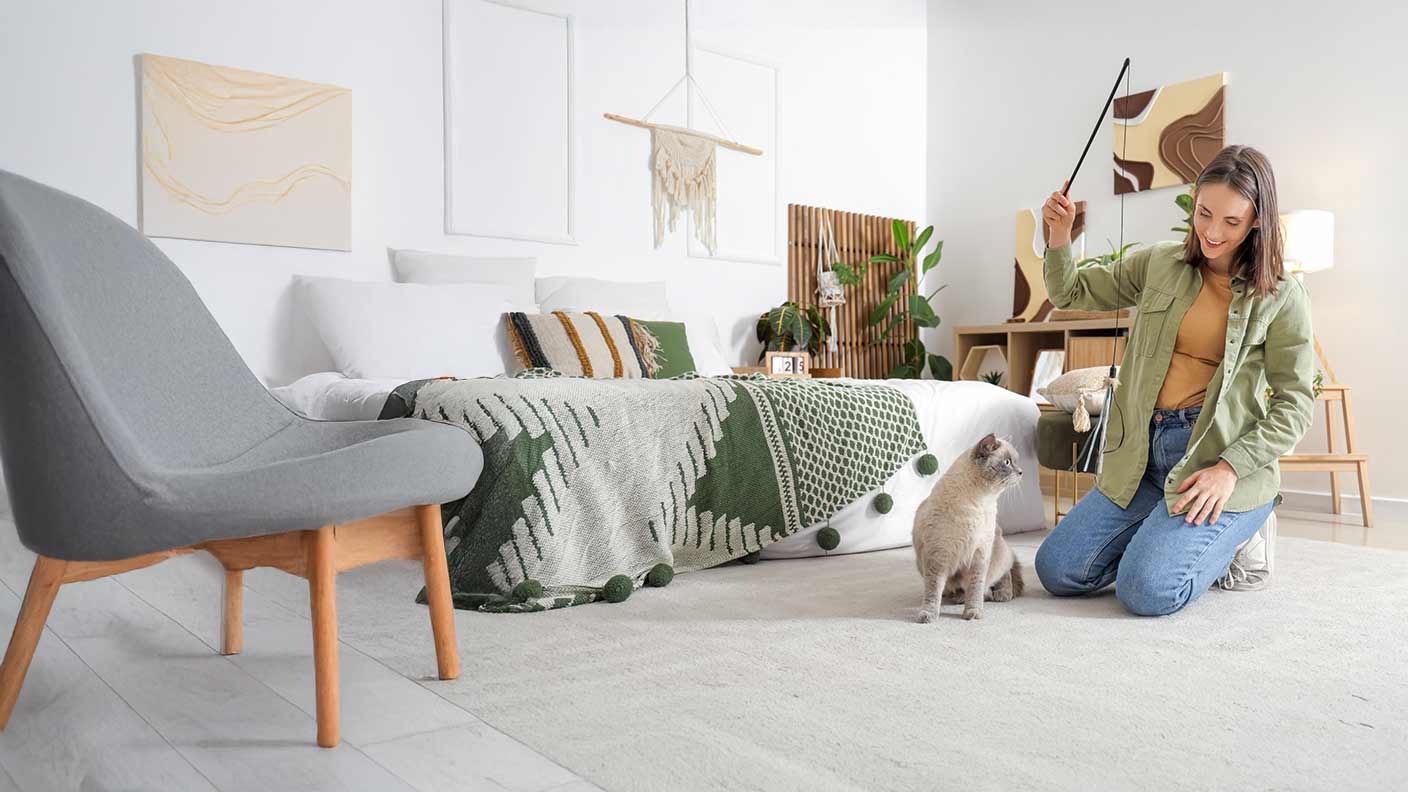
Fishing rod toys can be good fun, as they give your cat a chance to pounce. Just let them win roughly every third attempt, so they don’t become frustrated. Ping pong balls are another great choice for them to swat around. It may save them from knocking your glass off the table.
Food
Kitties are wired to hunt for their food, so puzzle feeders can give them some mental stimulation and a whole bunch of endorphins. These puzzle feeders can vary in difficulty, meaning you can slowly ramp up the challenge to keep your cat’s brain whirring and purring.
Behaviour
They can’t tell us straight, so the only way to tell if a cat is happy is by examining its behaviour and body language. There are some tell-tale signs that a cat is happy to see you or relaxed in your presence, including:
• Approaching you with an upright tail, slightly curved at the tip
• Slowly blinking in your presence
• Rolling onto their backs to show trust (but don’t stroke their belly)
All these cat behaviours are good signs, but if your cat flattens their ears or has wide pupils, they may feel stressed or anxious around you.
Likewise, if your cat is being destructive, it could be a sign that their needs are not being met.
Give them a safe space
Environment is everything to a cat, but they need more than food, a toilet, and cat furniture. Your cat loves to get up high and take in the surroundings from their vantage point. It also makes your watchful hunter feel safe, too. When they feel stressed, they’ll look for a place to calm down.
Vertical spaces like cat trees, radiator beds, or even cardboard boxes can provide your cat with the retreat they need.
Cat care tips
Cats don’t need a lot to make them happy, but that doesn’t mean they’ll cope with any environment. They have a set number of essential needs that, if not met, could leave them upset, frustrated, and anxious.
Water
Cats should have constant access to water away from their litter box and their food, if possible. If you can give your cat access to multiple sources around the house, including near where they sleep or play, they may drink more.
Wide, shallow bowls should be easy for most cats to drink from.
Litter
Cats are surprisingly clean, and to keep them happy, their litter tray needs to be kept tidy and out of sight. Give your cat privacy for their litter box, either in a cupboard they can access or a private corner of the house. You could even set up a little tray in a cage or carrier.
You should regularly clean your cat’s litter tray of any poop. If the litter is becoming smelly even after cleaning, replace it with fresh cat litter. Try to stick to a brand your cat likes and don’t switch around too much, or they may become fussy about it.
Sleep
Cats enjoy a good nap, and they lounge a lot. They’re not lazy; your four-legged friend just sleeps more than you do. Cats feel safe when they’re off the ground, with a quiet corner they can call their own.
If your cat isn’t resting much, they may not be getting enough exercise. Try to play games throughout the day and provide a scratching post. If your cat still isn’t sleeping right, it may be worth contacting your vet.
Grooming
Cats are very good at self-grooming, but there are points where they might need a helping hand rather than a paw. You may need to groom your cat if:
• They have matted or long fur
• They have things stuck in their fur from being outside
• They struggle to move around/reach themselves due to injury or age
• They’re wearing a cone
If you notice your cat isn’t grooming, or grooming excessively, these could be signs of other issues. If you’re ever unsure about your cat’s behaviour, contact your vet.
Your cat should keep their claws trimmed through scratching, which is an innate behaviour. Use scratching posts and boards to give your cat something to scratch at, or it might be your skirting boards that get it.
Cats are clean, so they rarely, if ever, need baths. You can use a wet, soft cloth soaked in warm water to remove dust and dirt. The only scenario where a cat might need a bath is if they have something dangerous in their fur. If this happens, you should contact your vet for advice.
Learn more about cat grooming habits.
Exercise
Idle paws make for a grumpy kitty. Happy cats are ones that can move and play – when they’re not lazing around. Staying fit isn’t just about mental stimulation, either. An important part of protection for your cat against conditions such as diabetes, obesity, and arthritis is staying active. This is especially true for indoor cats, who may struggle to move about more.
Play is a great way to get your cat moving, but you want to ensure they exercise without your help too. You can use tunnels, cardboard boxes, scratching posts, wall-mounted cat furniture or kitty trees.
How often should you feed your cat?
When it comes to feeding your cat, “little and often” is the way to do it. Your furry friend will usually prefer to eat several small meals a day, rather than everything at once. Unless a vet advises otherwise, this is the best way to feed your cat.
Additionally, try not to overfeed them. It’s easy to get carried away with portion sizes. If your vet has them on a specific diet, stick to it.
Protection for your cat
Cat protection can come in all shapes and sizes and understanding what to look out for is an important part of learning how to look after your cat. Here are some of the most common things to do or keep your eye on:
Dental care
Cats require dental check-ups to ensure their teeth are fit-for-purpose (eating, not gnawing on your favourite pillow). Many health conditions can appear through symptoms in the gums and mouth, too. That means regular dental check-ups could spot conditions early.
Vaccinations
Your kitten might not thank you for it in the moment, but vaccinations are one of the best forms of cat protection around. Vaccinations can protect against infection, illness, and disease, whether they’re an indoor cat or out and about.
Fleas
When you brought your cat home, you weren’t inviting guests. They’re not just irritating for your cat; they’re a challenge to get rid of and can lead to allergic reactions, blood loss and more. Don’t let fleas coast for free – or at all.
Neutering your cat
Cats can become sexually active as young as four months old. There are several reasons to neuter your cat that extend beyond preventing pregnancy.
In male cats, castration benefits include:
• Reducing the likelihood of roaming (and getting into trouble)
• Tempering fighting and aggression
• Lessening the risk of contracting diseases like Feline Immunodeficiency Virus (FIV)
• Preventing testicular cancer.
In female cats, spaying helps to:
• Prevent pregnancy
• Protect from ovarian and uterine cancer
• Stop your cat coming into heat
• Prevent womb infection (pyometra)
Microchipping
Microchipping is important for those moments when Mittens wanders out into the big, wide world and gets their toe beans tangled up in more trouble than they were expecting. With microchipping, should your cat be found far from home after they’ve gone walkabouts, you can be contacted.
Additionally, microchipping as of 2024 is a legal requirement. All cats in England must be microchipped before they’re 20 weeks old. This includes indoor-only cats.
Cat insurance
Your feline friend can find themselves in all sorts of trouble. Get protection for your cat against accidental injury, illness, and other benefits with Sainsbury’s Bank Pet Insurance.
FAQs
How often should you change your cat’s litter?
To keep your cat happy, you should scoop any poop out of the litter box regularly and replace the litter at least once a week. If the tray becomes dirty, it’s your carpet next. Try to spot clean once a day, with a litter replacement once a week to ensure your cat is happy with its toilet space.
What is the best cat bed?
Every cat is different, so the bed that makes your cat happy is going to be unique to them. If your feline enjoys curling up, a donut-shaped bed could be cozy. If they’re a stretcher, something long and elevated. For the cat who enjoys a hidey-hole, a cave bed where they can tuck away could be purrfect.
How to keep your cat safe?
Caring for your cat and keeping them safe can feel daunting. You can’t give your cat protection from every eventuality, but there are things you can do to secure them. Try to ensure you follow best practice and recommendations, including neutering, having regular check-ups, microchipping your cat, and cat-proofing your home.
Important Information
Sainsbury's Bank plc, Registered Office, 33 Charterhouse Street, London, EC1M 6HA (registered in England and Wales, no 3279730) is authorised by the Prudential Regulation Authority and regulated by the Financial Conduct Authority and the Prudential Regulation Authority (register no. 184514).
Sainsbury's Supermarkets Ltd is an appointed representative of Sainsbury's Bank plc. Sainsbury's Bank plc acts as an introducer to Pinnacle Insurance Ltd who is authorised by the Prudential Regulation Authority and regulated by the Financial Conduct Authority and the Prudential Regulation Authority (register number 110866). Registered office: 4th Floor, Limelight, Elstree Way, Borehamwood, Hertfordshire, WD6 1JH. Sainsbury’s Bank Pet Insurance is arranged, administered and underwritten by Pinnacle Insurance Ltd. Sainsbury's Bank plc and Pinnacle Insurance Ltd are not part of the same corporate group.
We do not provide personal recommendations to customers.