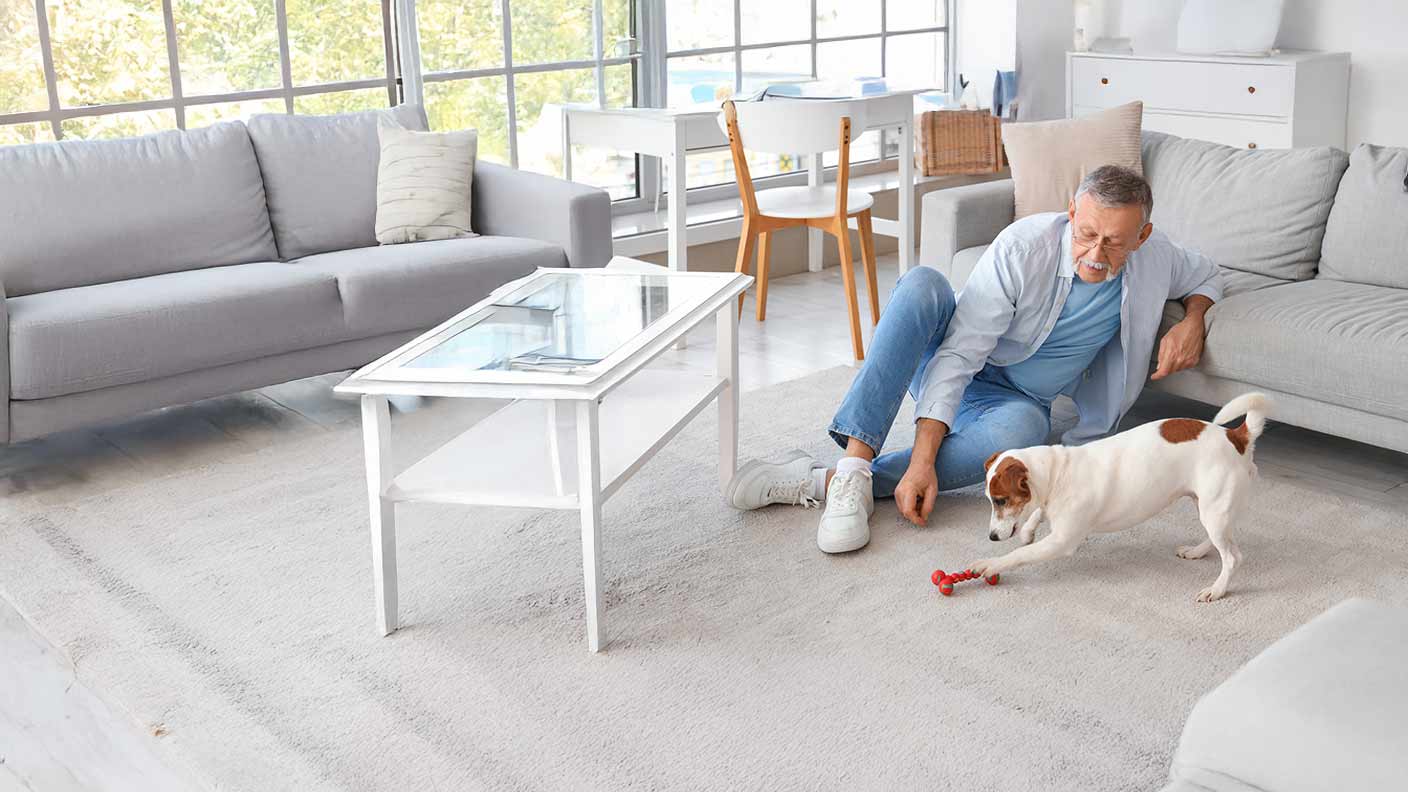
Treats and toys for older dogs
Things might slow down as your pup starts to grey, but you still need to keep boredom at bay. Treats and toys for senior dogs can be a fun and gentle way to look after your dog – even when they’re looking a bit long in the tooth. Discover the best toys and treats for older dogs in this guide.
Pet insurance provided by Pinnacle Insurance Ltd.
Do older dogs like to play with toys?
Yes, older dogs do like to play with toys – from young pup to old dog, they’ll always enjoy getting their teeth into something to play with. But they may struggle with the same games and toys they enjoyed as a pup.
It’s still important that you let your old dog get their toe beans into something that engages them. Playtime, toys and games can be a vital part of keeping an older dog healthy, happy and mentally engaged, which can help stop problematic behaviours.
Thankfully, there are senior dog toys that are specifically developed for entertaining for your ageing pup, while also being gentle on those old bones.
Senior dog toys
Playtime doesn’t need to stop just because your dog’s getting a bit grey. There’s a shelfful of senior dog toys that are perfect for your ageing pup’s particular needs. Consider incorporating the following into your older dog's routine:
Stimulating toys for older dogs
As your dog gets older, their cognitive function can decline – just as it can with us, so their brains need training. With stimulating toys for older dogs, you can help your dog remain mentally active.
Puzzles or problem-solving toys are a great choice for older dogs, reducing boredom and providing mental stimulation. Choose puzzle toys that can be played standing up or laying down, depending on your dog’s needs.
Remember to put interactive dog toys on a non-slip surface. If they move around a lot, the toys can become harder to solve and the effort of standing without slipping, or having to readjust, might be a bit much for your old dog’s ageing joints.
Chew toys for sensitive teeth
Dogs like to chew, and in their puppy years it seems like they’d nibble through anything. But, as they age, it may be harder for them to really get their teeth into things.
Chewing is an important part of caring for a dog’s teeth. But chewing, gnawing and biting isn’t just about cleaning their pearly whites – it’s also a great de-stressor for your dog.
The best types of chew toys for dogs with sensitive teeth are soft, rubber chews. These are still durable, but a bit kinder to old teeth and gums. You can even fill some of them with healthy dog treats, so they’ve got something to really dig their teeth into.
You don’t always need to splash out on toys and treats for older dogs, either. Depending on your dog’s needs, a homemade dog toy might do the trick. You could use a cardboard tube loaded with treats, then fold the cardboard ends down. That shouldn’t be too much work, even if your old dog is losing strength in their jaw or can’t bite as hard anymore.
Toys for dogs with reduced vision
There’s so much emotion in dogs’ eyes, it’s sometimes hard to imagine them ever deteriorating. While the mischief will never leave them, it’s common for an old dog’s vision to worsen with age.
However, one thing tends to stay consistent – your pup’s snoot and its ability to sniff. That’s why the best toys for dogs with reduced vision are ones that play on their sense of smell. Think of hide and sniff toys, treats inside tubes, or calm retrieve games.
Toys for dogs with poor hearing
When we think of dogs, we often imagine their big, floppy ears and keen sense of hearing. In some houses, a floorboard can’t creak without the pitter-patter of paws down the hallway. So, when a dog starts to lose their sense of hearing, it can come as a surprise. Suddenly, that squeaky toy they once loved doesn’t quite squeak the same and they’ve lost interest in it.
In this case, you can still provide satisfying toys to your dog that engage and stimulate their senses in other ways. Hiding and sniff toys are great for those pooches with poor hearing, as are puzzle toys and tactile toys that they can chew on.
What treats are best for older dogs?
Dogs enjoy treats – maybe even more than we do. However, you need to be careful of the number of calories your older dog is consuming. As dogs age, obesity can become a big risk. They may not be able to exercise like they used to, so they can be prone to packing on the pounds.
Kibble
Your vet may recommend a special senior dog diet, and treats might not be on the menu. If that’s the case, or if you’re just watching your old dog’s weight, dry food like kibble can be a great way to give your dog a treat without overfeeding them.
Just remember, these aren’t calorie-free – if your dog’s diet is strict, you’ll need to incorporate anything additional into the total sum.
Peanut butter
Peanut butter can be a good source of protein, but you need to choose the type of peanut butter you use carefully. Your dog might go nuts for the high salt, high sugar type, but that could lead to a lot of weight gain and should be avoided.
Additionally, be careful of artificial sweeteners – such as xylitol (also labelled as E967 or birch sugar). These aren’t just unhealthy; they can be dangerous. Just check the packet or ask your vet for advice on dog-friendly brands.
Vegetables
Vegetables or vegetable snacks can be fantastic, cooked or raw. Things such as carrots, broccoli and green beans will always go down well. Remember to cut up into little pieces, serve portions small and do not give your dog too much. Broccoli can cause stomach issues if eaten in abundance.
Fruit
Some fruits can be suitable for an old dog. Full of fibre and nutrients, apple can give your dog’s breath a pick-me-up, but they should be served sliced and without the pips.Just be wary of feeding your pup too much, as fruits are higher in natural sugars.
Other fruits you could consider are pumpkin or squash – like apples, they’re full of fibre and contain healthy vitamins suitable for your dog. The fleshy bits of pumpkin and squash cook just fine, but the seeds and rind aren’t advised. If you don’t want to cook, then unsweetened, tinned pumpkin could be a great snack to take on a walk.
How to stimulate an older dog
When choosing toys or games for senior dogs, focus on activities that will stimulate them – mentally as well as physically. If your old dog is tail chasing, barking more than usual, digging or pacing, they may not be getting the stimulation they need day-to-day.
Don’t worry, giving them entertainment that tickles their brain just right isn’t too hard with these games:
Hide and seek
Despite what we’re taught, you never grow out of hide and seek – and neither do dogs. Your greying canine will pounce at the opportunity to seek you out in the home, using all those sniffing and investigative skills they don’t often get to use indoors.
Scent walk
Dogs love a good sniff, and their sense of smell doesn’t degrade easily. With a scent walk, you can let your old dog get their snoot working, releasing dopamine and reducing stress.
Don’t focus on the distance or intensity of a scent walk, just allow them to exist, explore and take a whiff of whatever takes their fancy (within reason). Walks with grass, bushes, hedges and trees are often ideal for this type of walk.
Find it
Not the best at hiding? That’s okay, “Find it!” can yield similar benefits to hide and- seek, without you needing to clamber into a basket or shuffle under a bed.
To start, just pop your dog in another room or a dog crate. Next, hide some toys or treats. Once you’re done, let your dog sniff your hand and command them to go and “Find it!”
Give your old pup a chance – start easy and progressively get trickier over time.
New walk route
Trying a new walking route gives your senior dog a chance to explore and experience new things.
By changing the route (or running through a variety of ones you know your old pup enjoys) you can make things a bit more engaging – for both of you.
Look after your dog with Sainsbury’s Bank Pet Insurance
Sainsbury’s Bank Pet Insurance can mean peace of mind for you and protection for your pooch when they need it most. Keep tails wagging and toe-beans tapping for years to come with a variety of cover to suit your situation.
Choose from time limited, maximum benefit and lifetime cover based on your and your dog’s needs.
FAQs
How to entertain an old dog?
To entertain an old dog you need to look at ways to engage and stimulate their minds. For example, walks where they can take their time and sniff around are excellent and gentle on their joints. Additionally, puzzle toys, games like “Find it!” or hide and seek – or even a comfy window view – can give your dog the stimulus they need, even in their old age.
What does it mean when an old dog walks around aimlessly?
When an old dog walks around aimlessly or paces, it could be a sign of distress or cognitive dysfunction. They may also appear disoriented, as though they’re forgetting to back out of corners, or may begin to have accidents. For peace of mind, it may be worth speaking to your vet.
What not to do with an ageing dog?
As dogs age, it’s important to remain vigilant for changes in behaviour. Try being aware of signs of pain, excessive weight gain or difficulty walking. If your dog begins to struggle doing activities they used to, introduce a gentler routine for your old dog and don’t be afraid to check in with your vet. It’s better to be safe whenever you’re concerned about your dog’s health.
Important Information
Sainsbury's Bank plc, Registered Office, 33 Charterhouse Street, London, EC1M 6HA (registered in England and Wales, no 3279730) is authorised by the Prudential Regulation Authority and regulated by the Financial Conduct Authority and the Prudential Regulation Authority (register no. 184514).
Sainsbury's Supermarkets Ltd is an appointed representative of Sainsbury's Bank plc. Sainsbury's Bank plc acts as an introducer to Pinnacle Insurance Ltd who is authorised by the Prudential Regulation Authority and regulated by the Financial Conduct Authority and the Prudential Regulation Authority (register number 110866). Registered office: 4th Floor, Limelight, Elstree Way, Borehamwood, Hertfordshire, WD6 1JH. Sainsbury’s Bank Pet Insurance is arranged, administered and underwritten by Pinnacle Insurance Ltd. Sainsbury's Bank plc and Pinnacle Insurance Ltd are not part of the same corporate group.
We do not provide personal recommendations to customers.